When you own or manage rental property, you already know that serving court papers is part of the job: evictions, notices to quit, small claims, restraining orders, and more. What many owners do not realize is how much building access affects how quickly and cleanly those papers get served.
Short version: If your building has a locked common door and no keybox or keypad access for your constable, you are slowing your own case down and making proper service harder than it needs to be.
1. In-hand service is king. Access makes it possible.
In-hand service, physically handing documents to the person, is the gold standard. Courts trust it, and it is much harder to dispute. But if a constable cannot get past a locked common entrance and cannot legally or safely bypass that lock, what should be a straightforward service attempt turns into a matter of luck and timing.
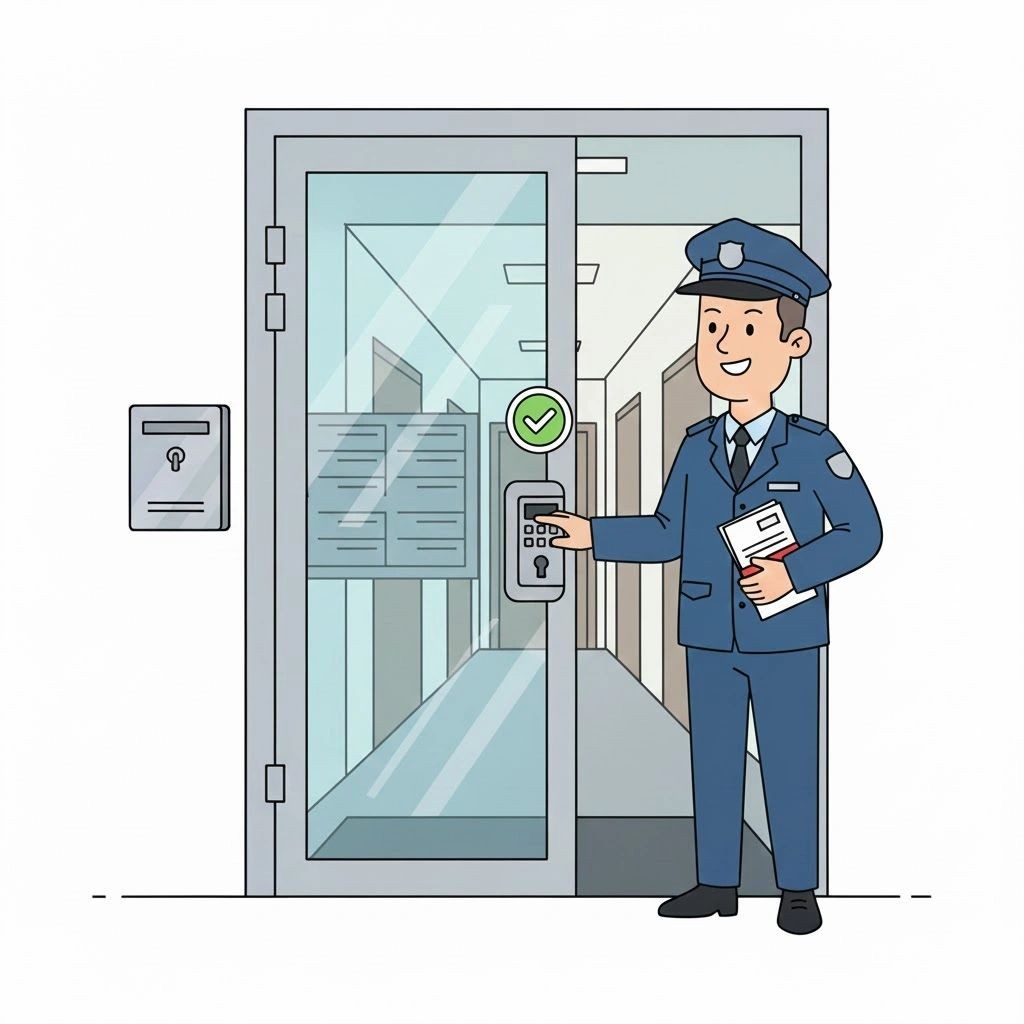
With a keybox or electronic keypad, a constable can enter the common hallway, knock on the actual apartment door, and make repeated in-hand attempts at reasonable times. That single change dramatically increases the likelihood of proper, timely service.
2. Even “last and usual” service is better with proper access
When in-hand service is not possible, service may shift to posting and mailing. However, posting papers on an exterior lobby door or in an unsecured vestibule significantly reduces the chance that the intended recipient ever sees them.
With authorized access to common areas, papers can be posted at the actual apartment door, mailboxes and unit numbers can be confirmed, and service is far more defensible if later questioned.
3. Why bypass tools are a bad idea
Attempting to defeat a locked door with tools creates serious legal and safety risks. To an observer, it looks like a break-in. That observer might be a neighbor, another tenant, or law enforcement. No responsible constable should place themselves, the property owner, or the case in that position.
4. Waiting outside costs time and money
Standing outside a locked building hoping someone will grant access often leads to multiple trips, longer service timelines, increased cost, and delayed court proceedings. A simple authorized access method avoids all of this.
5. “Just call me when you get there” is unreliable
Phone calls get missed. Schedules change. Meetings run long. A keybox or keypad does not forget, does not get stuck in traffic, and does not miss calls.
6. What a good keybox or keypad setup looks like
- Secure, weather-resistant keybox or keypad
- Unique access provided only to the constable
- Written authorization on file
- Clear limits for common-area access only
7. How this helps your case
- Faster service and shorter timelines
- Higher-quality, defensible service
- Fewer disputes about notice
- Reduced risk of police or neighbor misunderstandings
- Lower long-term costs
Bottom line: If your building has a locked common entrance and you expect legal papers to be served there, providing authorized access through a keybox or keypad is one of the simplest and smartest steps you can take.